 Inquiry Framing
Stop Asking Reviewers for Any Feedback
Learn how to replace open-ended, unproductive critique loops with targeted, boundary-defining inquiry questions that yield immediate actionable decisions.
Actionable instructions, checklist frameworks, and communication protocols engineered to structure cross-functional design evaluations before, during, and after gate reviews.
Inquiry Framing
Learn how to replace open-ended, unproductive critique loops with targeted, boundary-defining inquiry questions that yield immediate actionable decisions.
 Perspectives
Breakdown of departmental prisms: how mechanical, tooling, assembly, and quality stakeholders must inspect the identical drawing through distinct lenses.
 Manufacturing
A detailed checklist on datum schemes, machining accessibility, tooling lead times, and thermal relief requirements required during gate sign-offs.
 Governance
Clarify organizational accountability by establishing legal and engineering definitions between passive model viewing and binding release approvals.
 Pre-Alignment
Establishing clear acceptance thresholds and decision trees ahead of time so the session resolves conflicts rather than discovering them unprepared.
 Feedback Triage
Protocols for filtering aesthetic remarks, speculative queries, and non-blocking advice from binding engineering change orders.
 Documentation
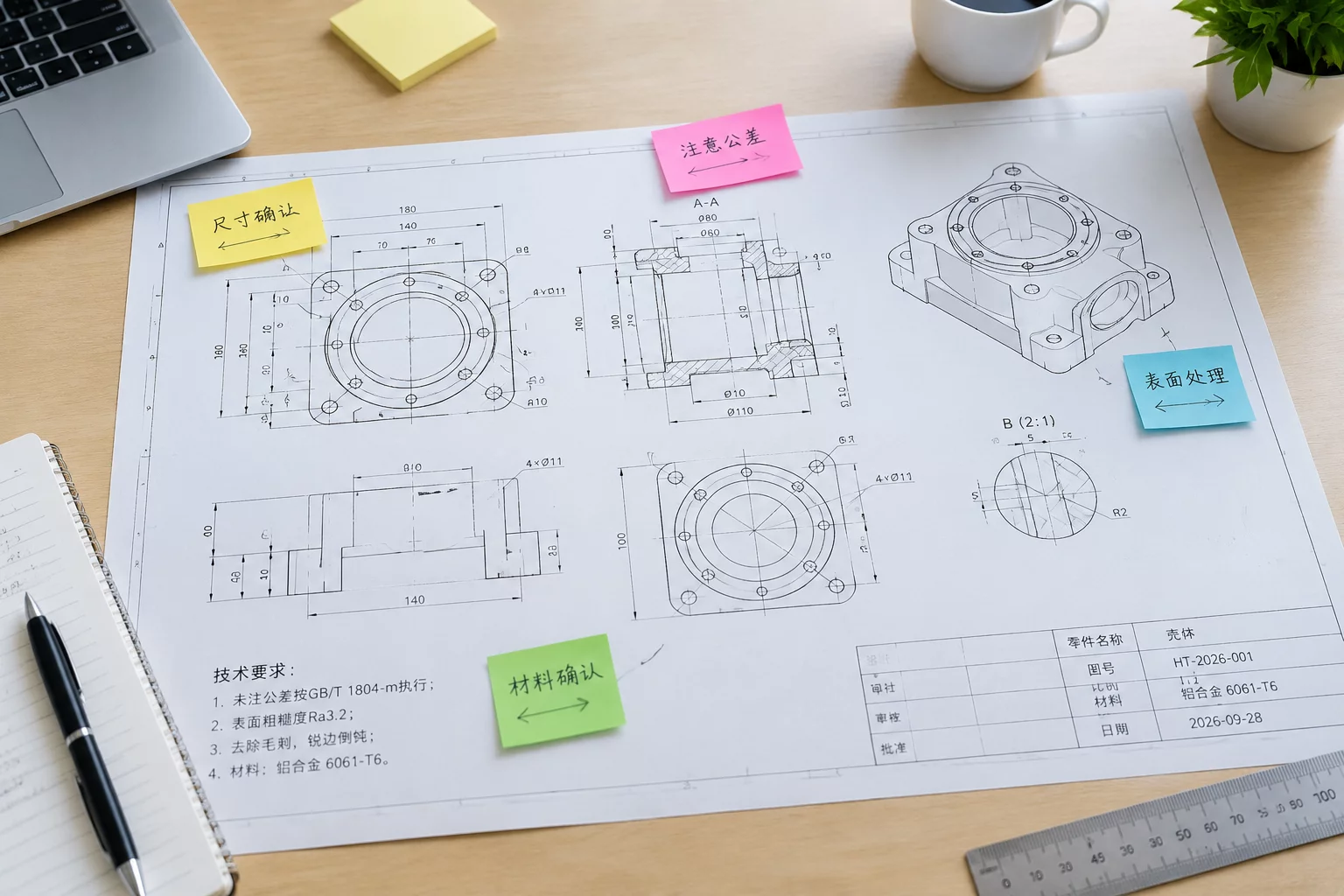
Layering drawing annotations, revision callouts, and key inspection datums so non-CAD specialists can critique with high technical accuracy.
 Scope Control
Identifying valid downstream discovery items versus critical gate blockers to prevent review paralysis while upholding product integrity.
Our engineering facilitators work with design, manufacturing, and systems teams to build bespoke stage-gate review criteria, custom checklist matrices, and cross-functional facilitation playbooks for complex programs.