Politehnica University of Bucharest Robotics Case Study
How student robotics teams used cloud CAD workspaces and isolated review perspectives to accelerate end-effector iteration, prevent assembly clashes, and streamline 3D printing workflows.
Collaborative Gripper Architecture & Review Synthesis
Rapid Iteration Across Multi-Student Mechatronics Pods
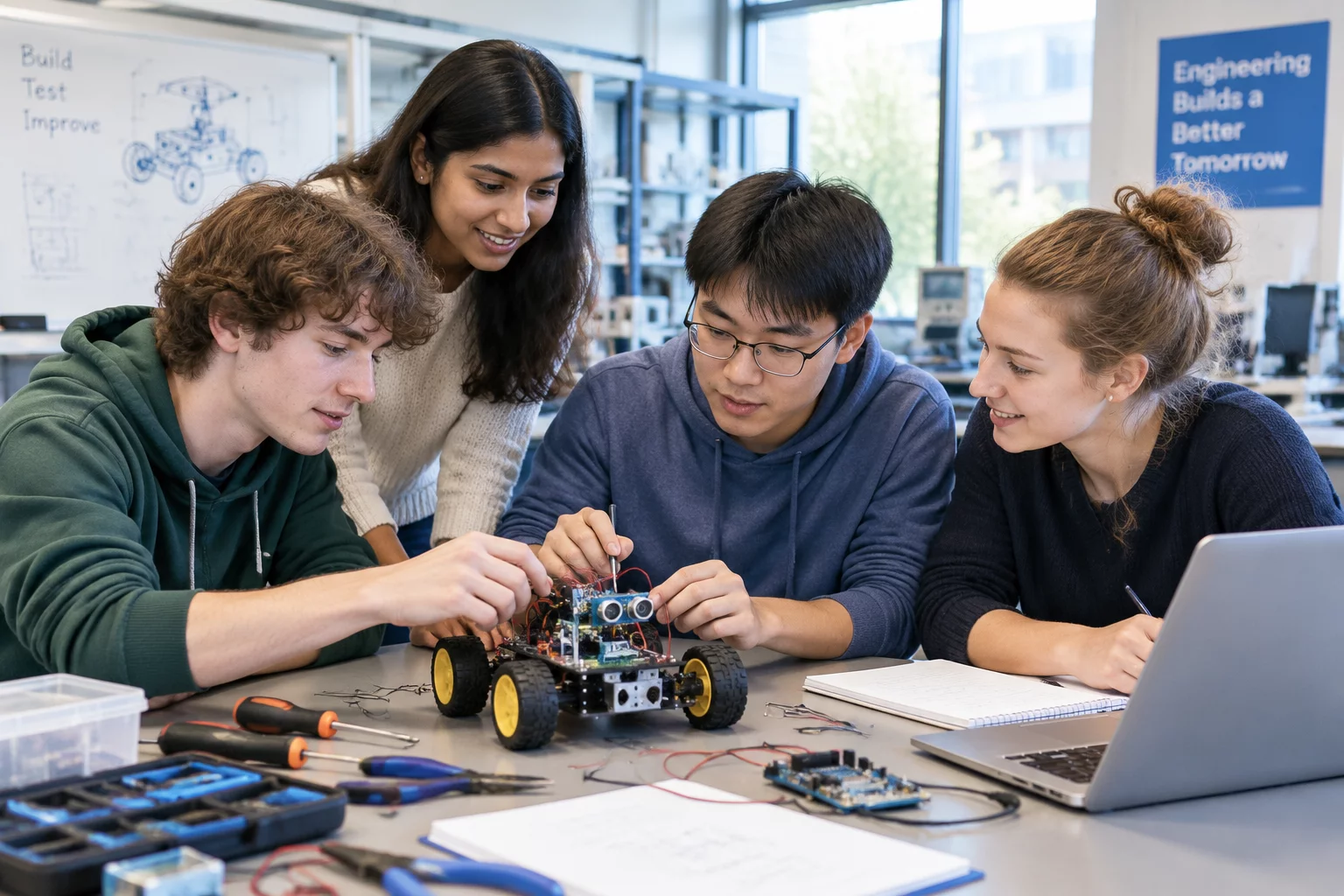
Engineering cohorts at Politehnica University of Bucharest tackled complex robotic manipulator challenges by structuring their CAD review milestones around functional sub-assemblies.
By moving away from local desktop archives to concurrent cloud workspaces, the robotics team separated pneumatic linkage validation from electrical sensor routing during structured evaluation sessions.
Apply Academic Review Rigor
Adopt structured perspective checklists across student labs and agile prototyping teams.
Overcoming Version Collisions in Student Robotics Development
Developing competitive robotics hardware under compressed university timelines frequently suffers from file overwrites and ambiguous review feedback. At Politehnica University of Bucharest, student teams developing modular robotic end-effectors faced bottlenecks when mechanical designers, embedded programmers, and manufacturing technicians attempted simultaneous modifications.
The team established isolated review windows where team members evaluated specific functional layers instead of issuing vague approval comments. Mechanical leads audited kinematic range of motion, while electrical specialists verified wiring conduit clearances through dedicated workspace branches.
“Isolating review questions stopped our team from debating subjective styling and focused every meeting on physical clearance, motor torque margins, and 3D printing tolerances.”
— Andrei Popescu, Robotics Team Lead, Politehnica University of BucharestThis structured discipline eliminated late-night redesigns prior to physical assembly competitions, allowing physical prototypes to function seamlessly on the first bench test.
The Five Perspective Windows Applied to Robotic End-Effectors
To prevent overlapping critique and unhelpful general comments, student project reviewers evaluated the robotic gripper design against five explicit inquiry gates:
-
Kinematics & Actuator Sizing Do the finger linkage geometries achieve required clamping force across full stroke without exceeding servo stall current?
-
Additive Manufacturing & Tooling Are cantilevered brackets self-supporting at 45-degree build angles without demanding excessive support material removal?
-
Assembly & Fastener Accessibility Can hex keys reach internal M3 locknuts once the tactile sensor housing is seated into the aluminum baseplate?
-
Sensor & Wire Harness Integration Does the flexible ribbon cable maintain minimum bend radius through the continuous 180-degree wrist rotation cycle?
-
Competition Rules & Mass Budget Does the total end-effector mass remain under the strict 450-gram payload ceiling defined by competition regulations?
Assigning distinct team members to separate checklist items ensured complete coverage of mechanical, electrical, and fabrication constraints before sending parts to the 3D printers.
Quantitative Performance & Deployment Metrics
The transition to cloud-based concurrent design review generated measurable improvements across the robotics laboratory's prototyping cycle:
| Design Cycle Reduction | 65% faster turn-around between initial concept and print-ready STL release |
|---|---|
| Collaborative Review Cadence | Twice-weekly 20-minute focused perspective reviews replacing 2-hour open debates |
| Additive Material Efficiency | 38% reduction in discarded failed prototype prints due to clearance errors |
| Active Team Contributors | 14 undergraduate and graduate students working seamlessly across simultaneous branches |
Request Review Case Consultation
Structure your internal engineering reviews with isolated perspectives and tailored inquiry protocols.